

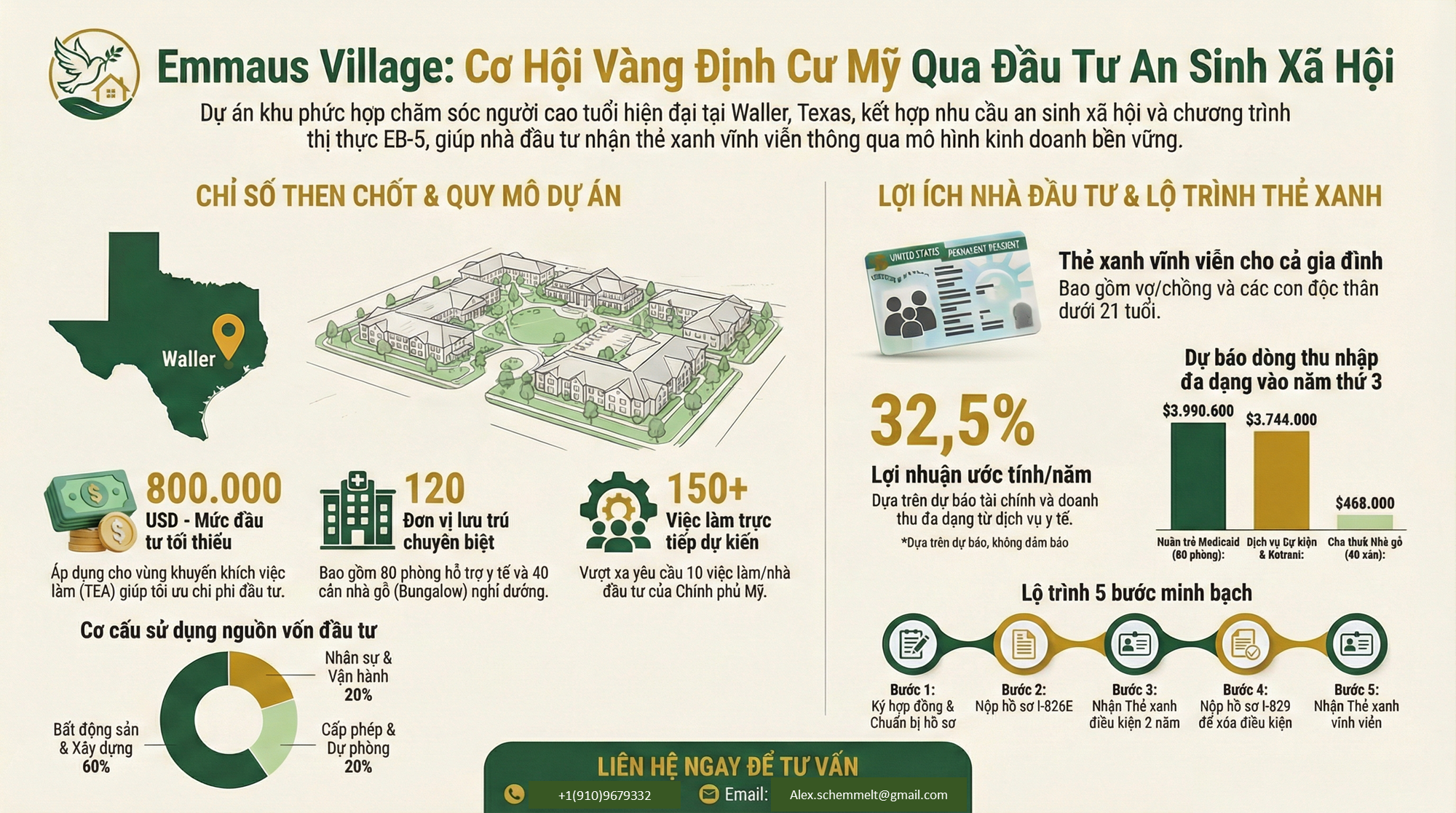
Investing in the U.S. through the EB-5 immigrant investor program is a long-term journey that demands absolute caution. An investor's goal is not just the permanent green card but also the ability to preserve and recover the $800,000 capital investment. However, not every project guarantees these two outcomes. Identifying risk factors during the due diligence phase will help you protect your family's interests against the variables of the U.S. market and legal landscape.
Mục lục
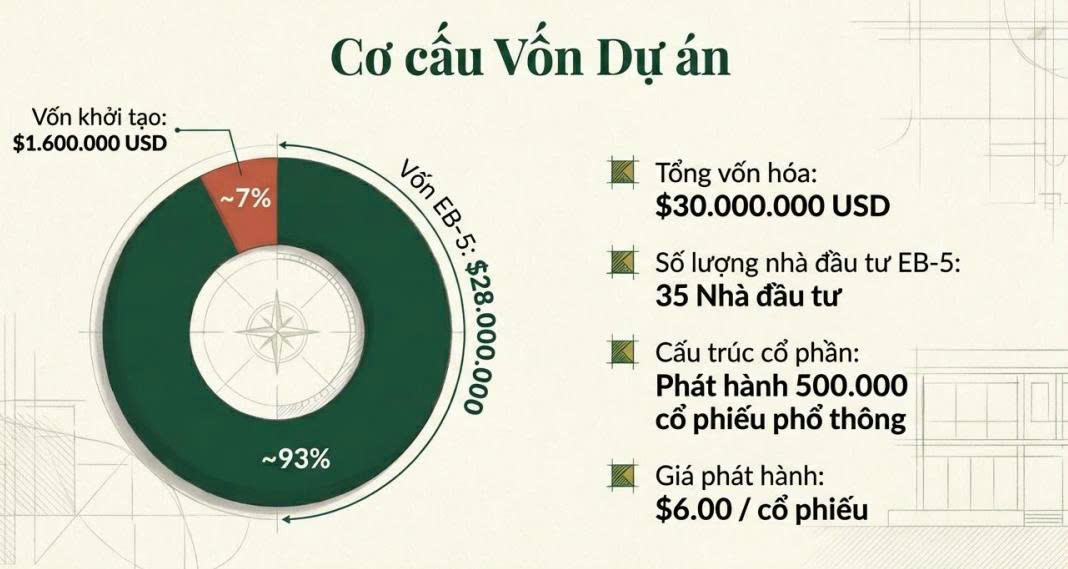
One of the primary measures of an EB-5 project's safety is its capital stack. A high-risk project often reveals loopholes in how it raises and manages its finances.
• Excessive EB-5 capital ratio: If the capital from EB-5 investors accounts for more than 60% of the total project budget, it is a red flag. Secure projects typically feature strong participation from the developer's own equity and loans from reputable banks. The fact that a bank agrees to disburse funds proves the project has passed a rigorous vetting process regarding its feasibility.
• Low repayment priority: In the event of a liquidity crisis, the order of debt priority determines whether you get your money back. If EB-5 capital is classified as junior debt or stands behind too many other creditors, the risk of total loss is significantly higher.
• Projects still "on paper": Projects that have not broken ground or lack full construction permits carry immense timeline risks. Conversely, projects already under construction or those with guaranteed bridge financing provide more peace of mind regarding the job creation roadmap.
Even if a project is commercially successful, you could still lose your green card if the project fails to meet the strict regulations of the U.S. Citizenship and Immigration Services (USCIS), especially following the RIA 2022 Act.
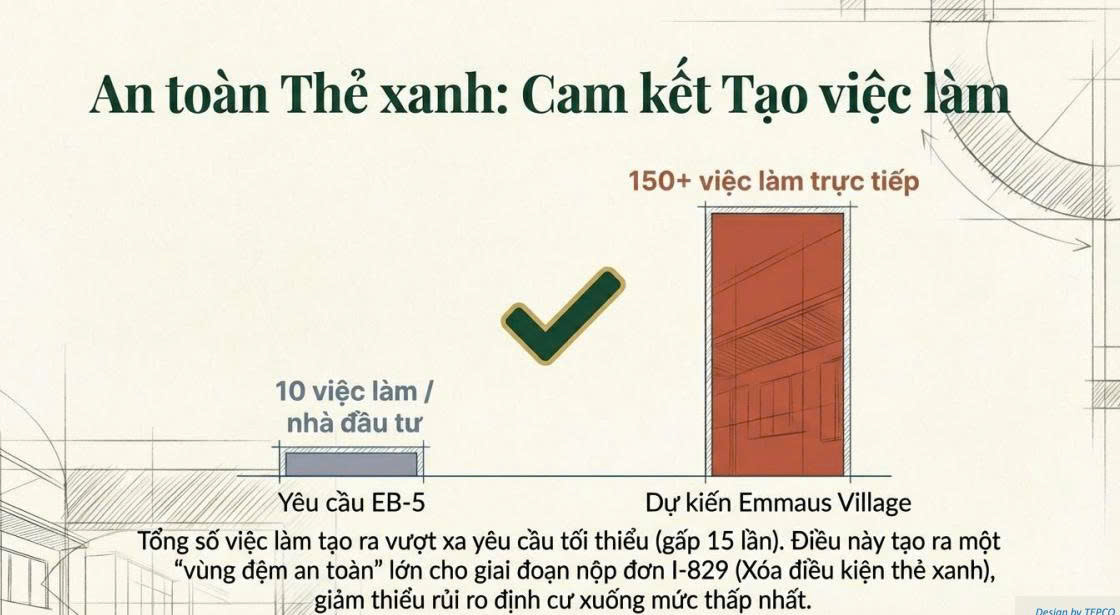
– Low job creation buffer: EB-5 regulations mandate the creation of at least 10 jobs per investor. If a project only expects to create the exact amount or has a buffer of less than 15% over the requirement, the risk of petition denial at the I-829 stage is high. A minor business downturn leading to staff cuts could directly jeopardize your immigration plans.
– Poor developer track record: New developers or regional centers that have never successfully returned capital to previous investors bring a high level of uncertainty. Always ask about the approval rates for Form I-526 and Form I-829 for their past projects.
– Lack of transparency and independent oversight: Under 2026 regulations, regional centers must employ independent auditors or fund administrators to oversee cash flows. If a project refuses to provide periodic progress reports or lacks a transparent capital management mechanism, it is a sign of an untrustworthy operational structure.
Furthermore, be wary of advertisements claiming a "100% green card guarantee" or "unusually high returns." U.S. immigration law strictly prohibits guaranteeing results, and by nature, EB-5 investments must remain "at-risk." Therefore, a project that appears too perfect on paper often hides underlying dangers. Conducting comprehensive due diligence with the support of immigration attorneys and independent financial experts is the only way to identify and avoid these high-risk projects.
EMMAUS VILLAGE
Address: 31831 Rochen Road Waller, Texas
Mr. Alexander Schemmel – Project Manager
Hotline: +1(910) 9679332
Email: alex.schemmalt@gmail.com
Mr. Khai – Vietnam Customer Support
Hotline: 0945255525
Email: john.emmausvillage@gmail.com
Website: emmausvillage.net