

In the EB-5 immigrant investor roadmap, form I-526 (now I-526E for regional center investors) and form I-829 are regarded as two decisive milestones. Understanding the differences between these two forms not only helps investors track their application progress but also ensures thorough preparation of legal documentation for each stage.
Mục lục
Form I-526E is the official starting point of the EB-5 process after the investor has selected a project and transferred funds into an escrow account. The primary purpose of this form is to prove to the U.S. Citizenship and Immigration Services (USCIS) that the investor meets the initial legal standards.
The focus of the I-526E stage lies in proving the source of assets. The investor must transparently demonstrate that the capital of $800,000 (or $1,050,000) was accumulated from legal sources such as employment income, business profits, real estate sales, or gifts. Simultaneously, form I-526E also focuses on the feasibility of the project. USCIS will examine whether the project is located within a Targeted Employment Area (TEA) and if the business plan is capable of creating 10 jobs for U.S. workers as committed. The result of a successful I-526E petition is the issuance of a conditional green card with a 2-year validity for the investor's family to settle in the United States.

Form I-829 is the final and most crucial stage to protect long-term permanent residency in the U.S. Investors must file this petition within the 90-day window before their 2-year conditional green card expires. The biggest difference between I-829 and I-526E is the shift from "projected plans" to "actual results."
At this stage, USCIS no longer focuses on the original source of funds but rather reviews the actual effectiveness of the investment. There are two prerequisite conditions for I-829 approval:
• Sustaining the investment: The investor must prove that the $800,000 capital remains invested in the project and is operating according to the registered business purpose. According to the latest 2026 updates, the minimum investment maintenance period is 2 years, providing investors with a more flexible capital return roadmap.
• Creating at least 10 jobs: This is the vital element of form I-829. The project must provide authentic evidence such as payroll records, tax filings, and personnel reports to prove that 10 full-time jobs have been created for U.S. citizens or permanent residents.
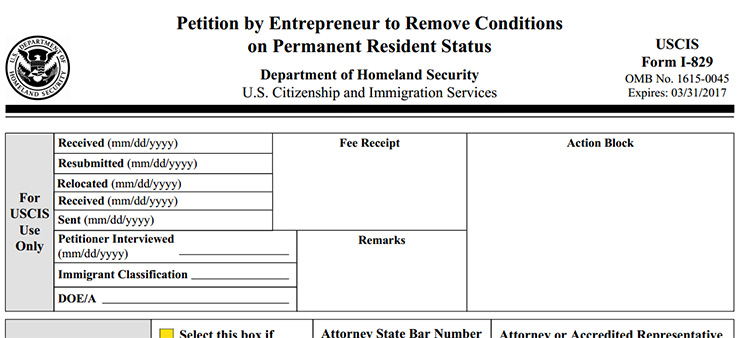
Once form I-829 is approved, the conditions on the investor's family green cards are officially removed and replaced with permanent green cards valid for 10 years. This also serves as the prerequisite for the investor to apply for U.S. citizenship after 5 years of legal residency.
In summary, while I-526E focuses on the legality of the funds and the project, I-829 is the verification of business results and actual job creation capacity. Working closely with consulting units and experienced immigration attorneys from the beginning will ensure the transition between these two forms is smooth and secure.
EMMAUS VILLAGE
Address: 31831 Rochen Road Waller, Texas
Mr. Alexander Schemmel – Project Manager
Hotline: +1(910) 9679332
Email: alex.schemmalt@gmail.com
Mr. Khai – Vietnam Customer Support
Hotline: 0945255525
Email: john.emmausvillage@gmail.com
Website: emmausvillage.net